AcePACES

What is AcePACES?

AcePACES is a 6 week, small group, online, interactive programme where I teach the strategy I used that allowed me to pass PACES first time as an FY2.


How I passed PACES as an FY2.

It wasn't because I went on multiple crash courses, stamp collected rare signs, or that I was a walking textbook.

It's because I practiced one thing: presenting in a clear and structured way. The best part — you don't need a depth of knowledge. I proved that by passing as an FY2.

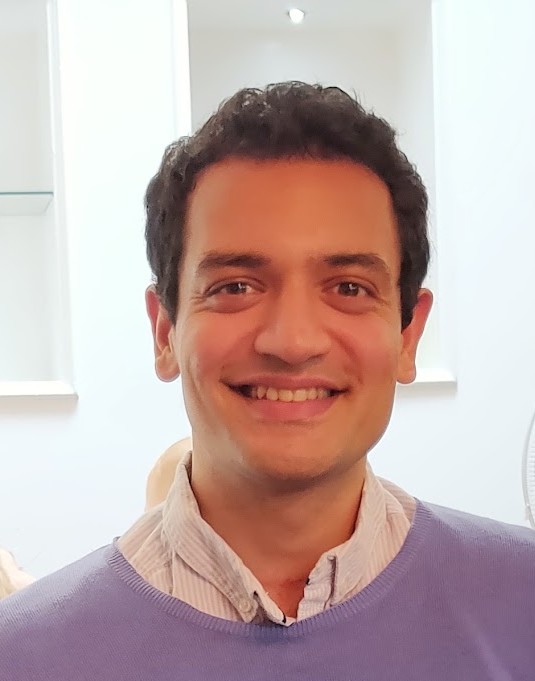
My name is Dr Dhruv Panchal. I qualified from Imperial College London (proxime accessit to the London Medal) in 2011 and gained full MRCP in 2013. I then trained in Neurology in the East of England, where I also earned a Wellcome Trust funded PhD at the University of Cambridge.

Give me what you already know, and I'll show you how to structure and present it to pass.

Dr Dhruv Panchal, AcePACES tutor
DR DHRUV PANCHAL

Who is this for?

  First-time sitters who know the medicine, but are understandably nervous.

  Second-time sitters who missed narrowly and know exactly how close they were.

  Doctors who trained abroad (IMG) and need to understand the 'culture' of PACES.

  Anyone who goes blank on questions outside of the rehearsed part.

  Anyone who dreads neuro.

Who is this not for?

  Someone who believes cramming is the only solution.

  FY2s (trust me, it's not worth it)

The problem: knowing more doesn't increase the chance of success

Most candidates think that the way to pass PACES is to tell the examiner as much as possible. And to do that you need to know more conditions, more signs, more differentials.

This is not true. It is about being selective, strategic and keeping the discussion relevant. This is the difference between a smart junior doctor and a wise senior one.

Approaching the stations like this has several advantages:

1

Being selective shows you are thoughtful.

2

If the examiner wants to know more, they will ask — you'll have that knowledge in reserve.

3

It will be different from every other candidate and make you stick out — examiners are human, and they compare.

4

This strategy keeps you calm — even under pressure.


My solution - be selective by being broad

Here's a case example. The first is a typical answer to a standard cardiology station.

TYPICAL ANSWER WITH NO FRAMING STRUCTURE

This patient has signs consistent with decompensated heart failure as evidenced by a raised JVP, peripheral oedema with an ejection systolic murmur. I would investigate by doing a chest X ray, a 12 lead ECG, an echocardiogram, blood tests including FBC, LFTs, BNP.....

Here's an answer that starts broad, then gets selective on the investigations.

ANSWER WITH FRAMING STRUCTURE

This patient has signs consistent with decompensated heart failure as evidenced by a raised JVP, peripheral oedema, with an ejection systolic murmur. The investigations I would request would be to answer the following - what is the diagnosis of the murmur? To confirm presence and severity of the heart failure? The secondary effects of the heart failure? So, an echocardiogram would be the best test to diagnose the murmur, quantify its severity, look for other hidden pathology, assess degree of heart failure. A 12 lead ECG could show me signs of arrhythmia...

Is this answer better? I believe it is. It shows the candidate knows exactly what to do and why. Rather than listing investigations, there's a considered discussion of an aspect of the case. This programme will get you to lead these discussions for any case.


What this programme offers

Six 1-hour online sessions, in a small group of up to 4 people. We cover the most common PACES stations with a focus on examinations.

It will be highly interactive. From Day 1 you will practice case after case and we will quickly develop strategies to add breadth and selectivity to your answers. I do this by asking a lot of questions (I'm friendly about it, don't worry).

This method has a basis in learning theory. Real time feedback plus pushing you to the edge of your comfort zone ('zone of proximal development' in teaching theory) reinforces real change fast. With this, you can greatly improve your chances of passing without cramming more facts.

This is how I passed as an FY2, and I'm confident it will help you too.

Get a spot →

Teaching testimonials

I have been teaching this way for over a decade. See what others have said.


Price

Cohort Per person
Solo sign-up £499
Group of 3+ (you bring the group) £399
THE GUARANTEE

Don't pass this time? You join my next full course for free. I want you to pass.


Frequently asked questions

Do I need to bring my own group?

No — you can sign up alone for £499. The group price is just a discount if you're already studying with others. It's not a requirement.

Is this only for people who've failed before?

No — it works whether this is your first try or a resit. If you already know the material but struggle to show it clearly under pressure, this is where I can help most.

Will this replace my own revision?

No. You likely already know the core information. The Framing method will emphasise your understanding of things almost everybody overlooks — like what treatments are disease modifying vs symptomatic, what tests are diagnostic vs supportive, and stating goals of treatment that occur in the real world rather than contorting your answer into conservative/medical/surgical.

Is this just another comms course?

No. Whilst the output will be a polished presentation, the focus is organising your knowledge in a way that is accessible and structured. It will feel like revision but from a different angle.

Can you explain neuro to me — I really hate that station?

Neurology is made needlessly complicated. From my experience, I'm very confident after the course you will have a better understanding and less fear of the subject.


Get your spot

Send me an email to ask questions or book a spot. I will reply within 48 hours.

I can only take on 5 groups per diet (max 4 per group).

Contact: hiacepaces@gmail.com